Visit the volcanic eruption on La Palma
On 19 September, a as yet unnamed volcano erupted on La Palma, causing widespread destruction in the south-western part of the island, and there are still no signs of it stopping. For any travellers wondering whether now is a good time to visit La Palma – whether because of the volcano or in spite of it – these guidelines may prove useful.
You can travel to La Palma as normal
Firstly, it’s important to remember that not all of La Palma is affected by the eruption. Only 8 per cent of the island is currently inaccessible, either due to the destruction caused by the lava or because of safety restrictions within the exclusion zone.
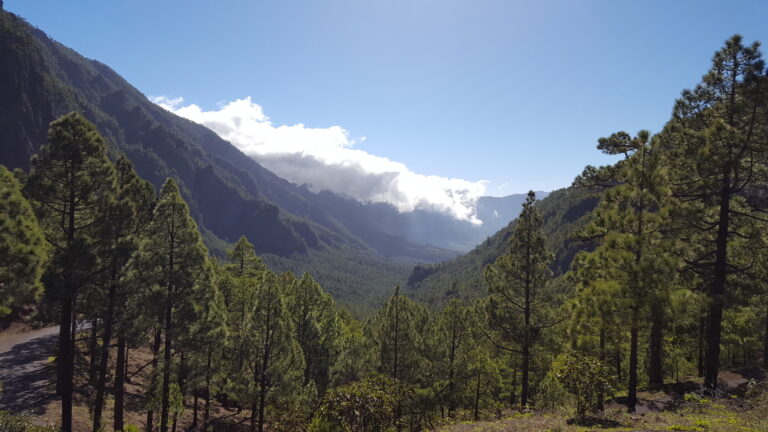
In the rest of La Palma, the island’s main tourist attractions are accessible without restrictions, such as the Roque de los Muchachos, the Caldera de Taburiente, the Teneguía and San Antonio volcanoes, the Los Tilos Nature Reserve, the historic centre of Santa Cruz… And, of course, many of its best-known beaches, such as Los Cancajos, Nogales, Bajamar and the natural pools at Charco Azul.
Furthermore, the vast majority of the island’s hospitality establishments remain open as normal, so it is possible to stay in hotels and rural guesthouses and enjoy La Palma’s cuisine in its restaurants.
In areas not affected by the volcano, there are only a few factors to bear in mind:
Ash:
Depending on the wind direction, the ash spewed by the volcano may reach other towns on the island. To avoid any confusion, this is not the sort of ash we see in a bonfire, but is more like the black sand found on the volcanic beaches of the Canary Islands.
If there is a large amount of ash, the authorities recommend wearing FFP2 face masks to avoid inhaling particles, particularly if you intend to sweep or clear away the accumulated ash.
The spread of ash towards the east of the island may lead airlines to cancel some of their flights to La Palma as a precaution; it is therefore strongly recommended that you check the status of your flight and confirm whether the airline can arrange for passengers to travel by ferry should the flight be diverted to Tenerife.
The tremors:
The small earthquakes associated with the volcanic eruption are usually mild and go unnoticed by the public, but in some cases they do reach magnitudes of between 3 and 5 on the Richter scale, which can be felt as slight vibrations, particularly when standing still indoors. These tremors are occurring at great depth and, according to experts from the National Geographic Institute, are normal and pose no risk.
Visiting the new volcano on La Palma
The area affected by the volcano – whether by lava damage or preventative evacuations – is situated in the south-west of the island, between the municipalities of El Paso, Los Llanos de Aridane and Tazacorte. Although it is not possible to visit this area for obvious reasons, it is possible to view the volcano from various nearby vantage points.
However, we must bear in mind at all times that this is an emergency situation and a natural disaster with tragic consequences for many people; therefore, the first rule for any visitor must be to comply with the orders and recommendations of the authorities and emergency services, and to respect and assist those affected as much as possible.
Viewpoints of the volcano:
The volcano can be seen with the naked eye shortly after passing through the summit tunnel, and is visible from many points along the LP3 road; however, you must not stop in unauthorised places so as not to cause accidents or hinder the work of the emergency services. Similarly, you must not even access this road if the authorities decide to restrict it to residents and workers.
Along this road, there are spots such as the car parks at La Cascada restaurant or the Centro Comercial del Mueble, from where you can see a side view of the volcanic cone and observe its various vents.
However, the best-known viewpoint is the one in the square by the church in Tajuya, from where most television broadcasts are filmed. During the All Saints’ Day long weekend, the La Palma Island Council organised a free bus service so that those wishing to see the volcano could get here without blocking the road with their private vehicles. If this measure is maintained in the long term, it should become the only means of access for visitors.
Other highlights include the Mirador del Time and the Mirador de la Punta, both in Tijarafe, from where you can enjoy a complete panoramic view of the eruption, from the volcanic cone to the land reclaimed from the sea by the lava.
A final point of interest is the Port of Tazacorte, from where the fajana – or lava delta in the sea – can be best observed, provided it is open to the public.
Precautions to bear in mind
It goes without saying, but not everyone follows this rule: under no circumstances should you enter restricted areas, to avoid putting yourself and the professionals who might have to rescue you in danger. Some images and reports by journalists or tourists may give a false sense of security, but it is important to remember that inhaling toxic gases near the lava flows can be fatal.
Although air quality is excellent on most days, this can change if a temperature inversion occurs, preventing smoke from dispersing, or on occasions when lava has reached the sea or burnt down facilities containing toxic substances.
Once again, you should pay close attention to the authorities’ advice to protect yourself properly, whether by wearing face masks or safety goggles, or simply by avoiding the area when access is restricted and enjoying the other parts of La Palma instead.
Blog
Keep reading